(This article was originally posted here on The Wollongong Nursery Blog.)
First published here 2nd April 2026.
By far the best all-round pest control method is to simply exclude them. This is of course often easier said than done, but for many many set-ups exclusion netting is the most efficient and practical way to ensure pests never get anywhere near your fruit trees or vegie crops.
Nets with a large mesh size are great for keeping birds, bats, possums, kangaroos and other large animals out. But to exclude absolutely everything, go for nets with a small mesh rated for fruit-fly, cabbage moth and other insects. If they keep those out, they’ll also keep smaller animals such as mice and rats out, as well as, by default, all the larger ones.
You may not known that this kind of netting comes in a range of sizes, from bags to large nets, to suit all purposes. Let’s go through these now.
The Netting Material
All netting described below is made from the same 2 mm weave, which is non-toxic, UV-stabilised, lightweight, reusable, breathable, washable, and with a shade rating of 20%.
This netting excludes all insects including the dreaded fruit-fly and cabbage moth — as well as birds, mice, rats, bats, possums, wallabies, kangaroos, dogs, cats…
Fruit Protection
SMALL Fruit Protection BAGS (15 cm × 25 cm)
copyright © Kristi Ellinopoullos
These small bags come in packs of ten.
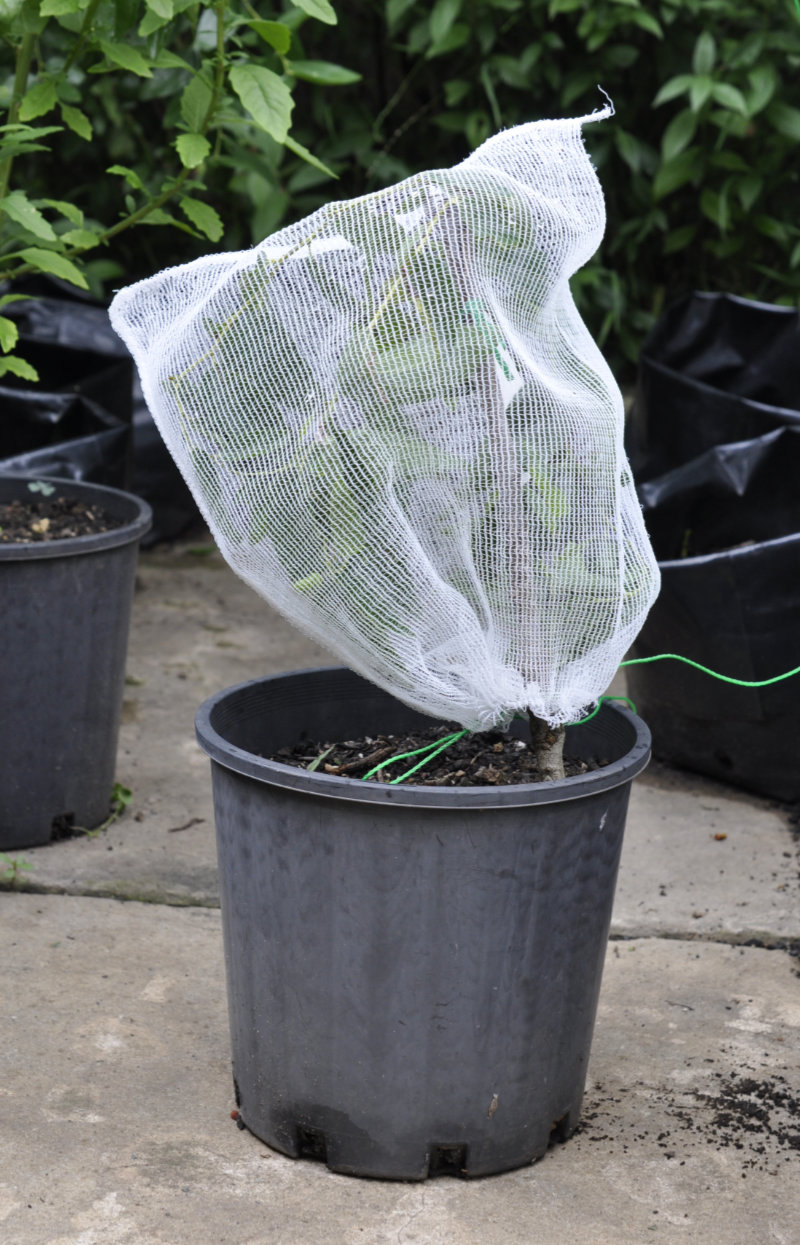
Each bag has a drawstring with which to securely fasten it around small clusters of fruit on, for example, young jujube trees, or around single, large fruits such as apples and peaches.
You could also use a single bag as in the photo, as a mini net to completely cover and protect a young, small plant such as that jujube tree above!
LARGE Fruit Protection BAGS (30 cm x 30 cm)
copyright © Kristi Ellinopoullos
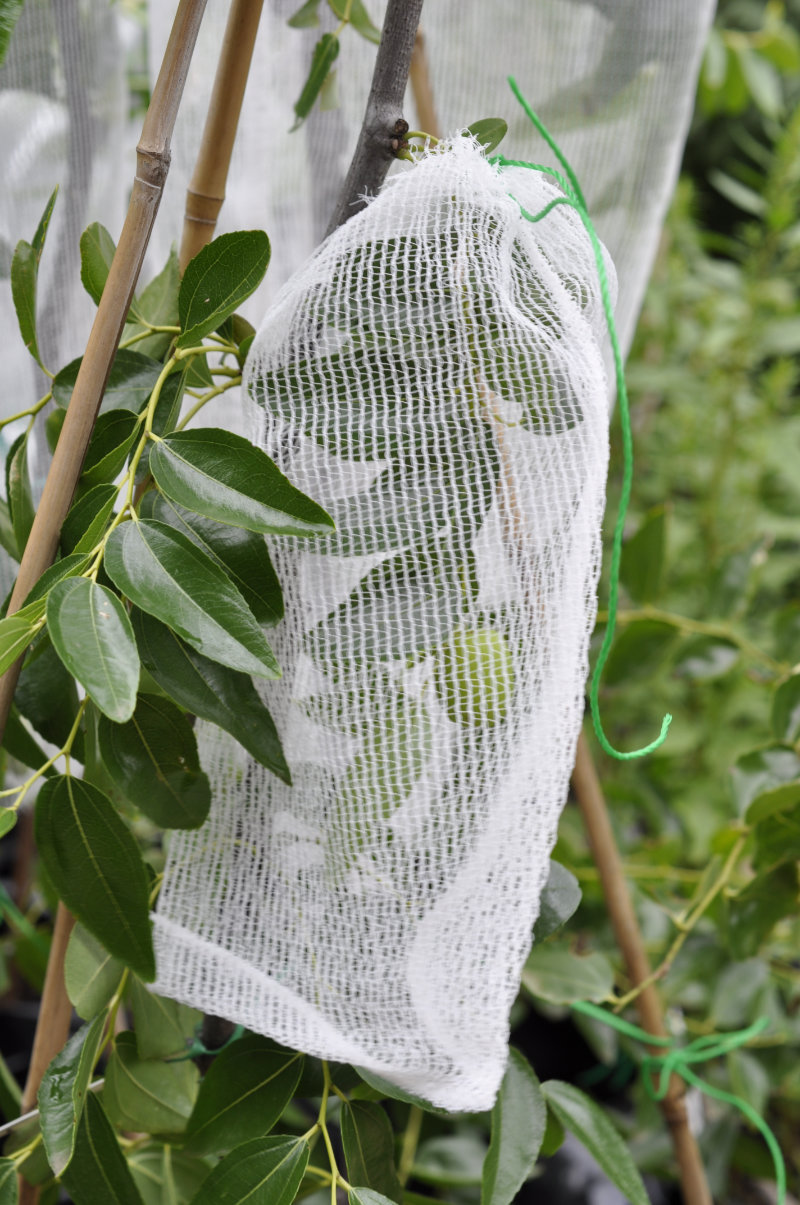
These larger bags also come in packs of ten and have drawstrings.
The size is great for young-but-older trees with larger fruit clusters. These were life-savers on my taller jujube and fig trees.
And again they can be used as a mini net to completely cover and protect a young, but taller tree.
LARGE Fruit Protection SLEEVES (30 cm x 90 cm)
copyright © Kristi Ellinopoullos
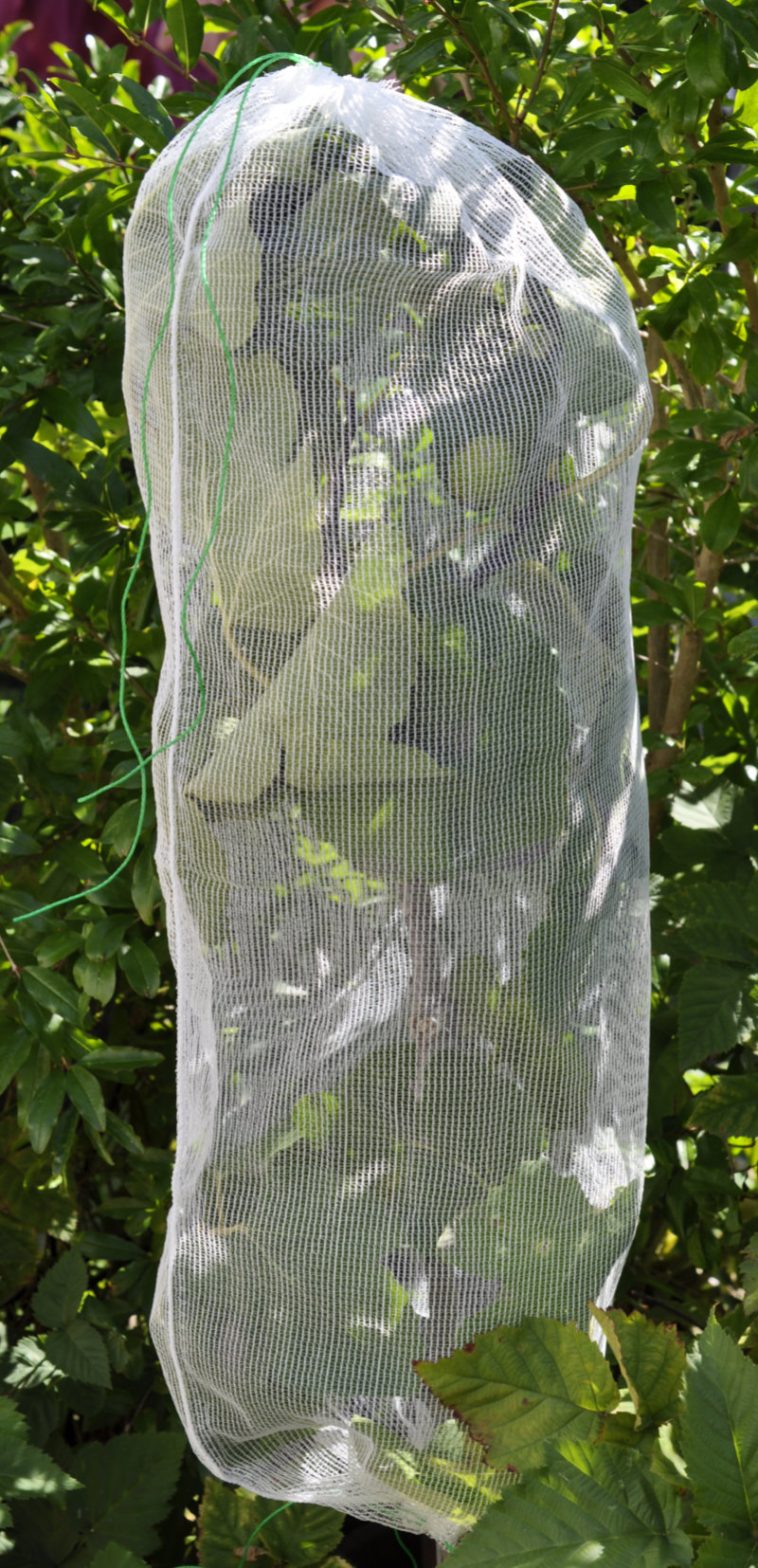
These large sleeves come in packs of five and have drawstrings at both ends.
A drawstring at each end enables you to position and secure the sleeve anywhere along a branch, and the large size ensures good coverage of fruit-heavy branches within a single sleeve.
Being able to access either end at any time is also very helpful when the fruit at one end are green but ripe at the other!
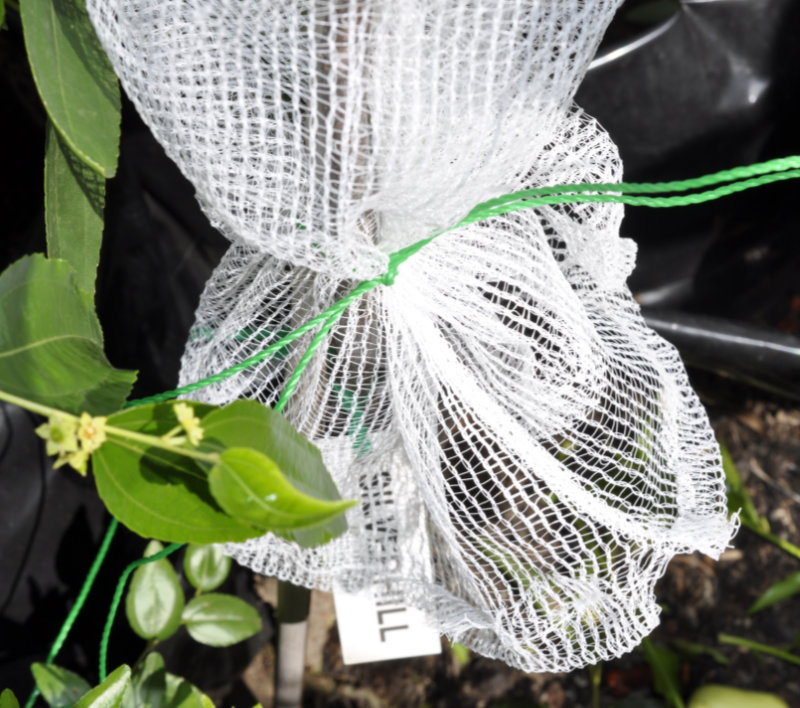
One very mild criticism I have with the sleeves — which I’ve not noticed with the two bags above, is that sometimes one of the drawstrings is not positioned well. If not noticed in time you may lose one of the ends inside the seam and it’s a very fiddly procedure to feed it back through. I don’t bother, but pull the whole string out and secure the bag by wrapping the string around the outside as in this photo:
copyright © Kristi Ellinopoullos
Sometimes it makes for a more secure fit anyway!
This size was invaluable for my young but tallest jujube trees and for the fruiting branches of my younger but wider fig trees.
The jujube trees were more narrow and upright than the figs, and I used many of these sleeves as nets for complete coverage:
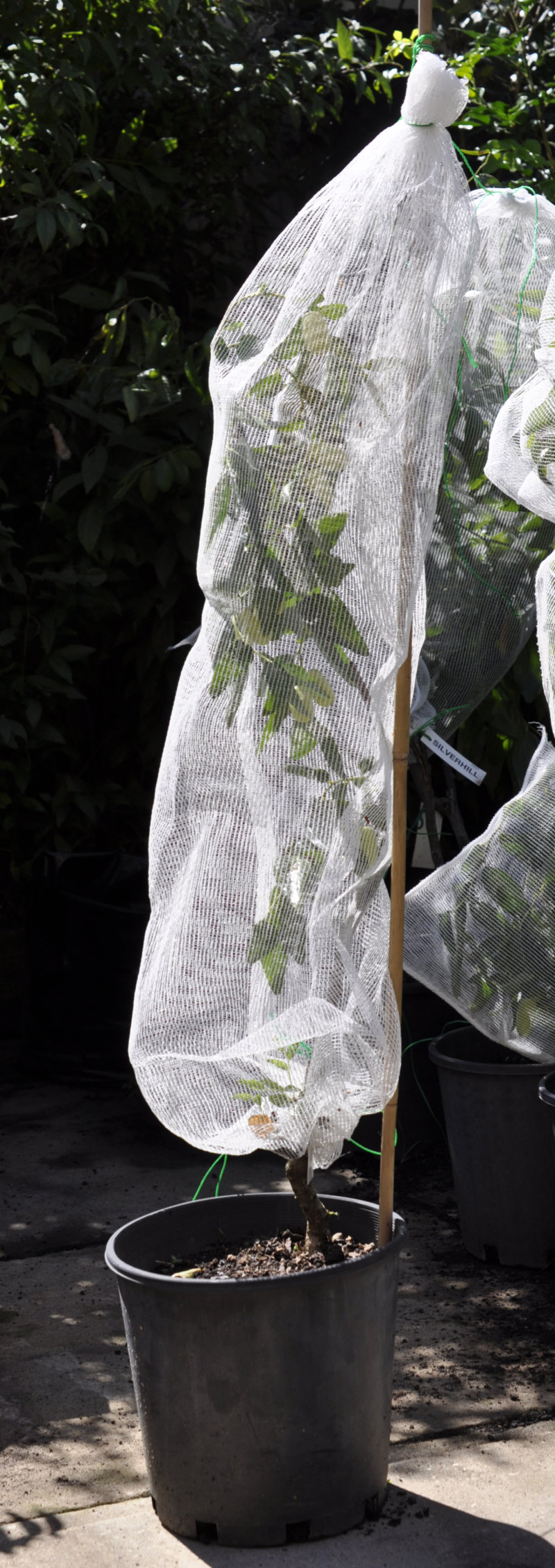
copyright © Kristi Ellinopoullos
The drawstring was long enough to help secure trees to stakes as well!
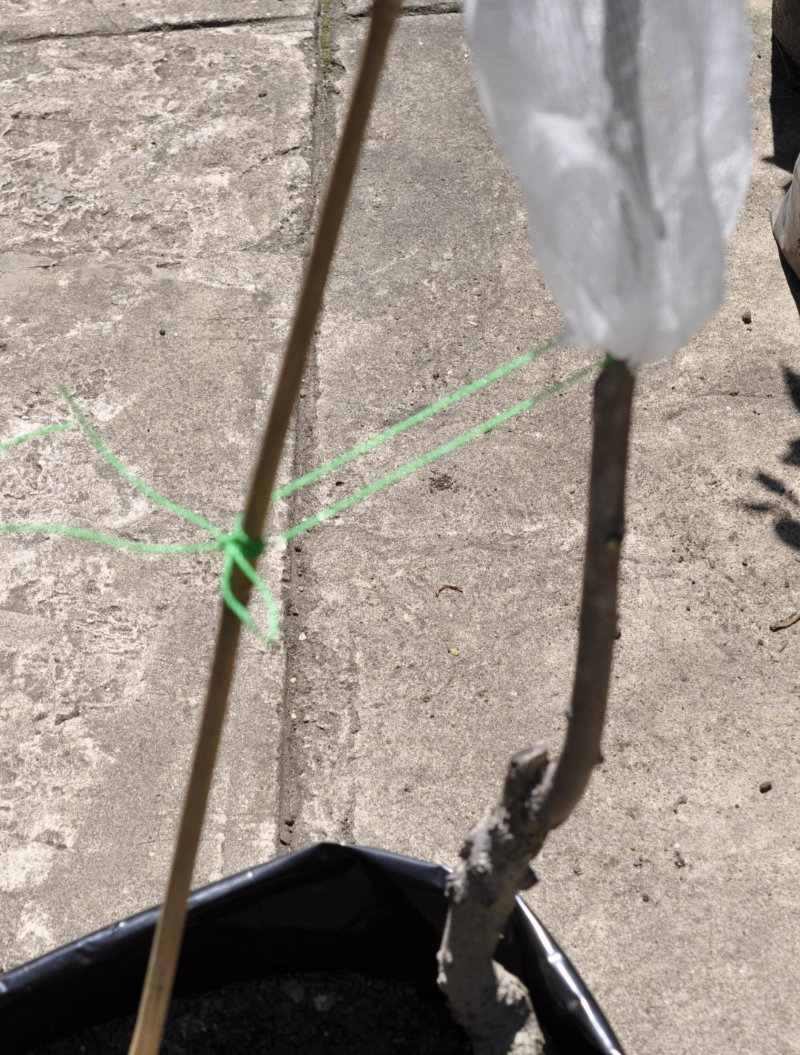
copyright © Kristi Ellinopoullos
These bags and sleeves are available via the links below::
Ten-Pack of SMALL Fruit Protection BAGS (15 cm × 25 cm)
Ten-Pack of LARGE Fruit Protection BAGS (30 cm × 30 cm)
Five-Pack of LARGE Fruit Protection SLEEVES (30 cm × 90 cm)
Bag and Sleeve Combo
About the Author

2 comments
Comment from: jimmywomble Member

Comment from: kristi Member

I loved reading your story Jim, thank you so much for your input!
(I absolutely agree with you that these bags and sleeves are not the best way to go for an orchard, or even for a single large tree for that matter. I brought these in for the small and young trees I sell, for which they are superbly suited. Later I’ll be supplying larger nets for larger trees. )
Back to your comment - without a doubt nets are everything you say. And who likes pesticides, really? For sure initial net setup costs can be eye-watering, and they do require a good chunk of time and effort, but they pay for themselves over and over and over. Pesticides are ongoing and non-stop.
I used to bait only (pheromones), and still do, but these days I do this so as to monitor numbers, and also to try and reduce those numbers for next season. One downside to nets is that they simply encourage fruit fly to move on to easier targets. I do think it’s just as important to eradicate the fruit fly as much as possible whilst they’re there.
The local insectivorous birds may help in this regard too.
Thanks for the tip regarding rats chewing through at ground level. You inspired me to post my homemade rat bait recipe :)
Here: https://jujubetrees.com.au/the-biosphere-blog/an-effective-homemade-rodenticide
Nothing more than plaster of Paris and a foodsource, but it absolutely works, so long as it is kept dry at all times. Very easy to scale quantities up or down too.
Thanks too for the insight on foxes/dogs being partial to persimmons, the things we learn!
Thank you again, Kristi
Hello Kristi, we’ve been using exclusion netting for nearly 20 years for fruit fly control and have no pesticide use due to severe allergies. Started off using mosquito nests but these would become fragile after a couple of seasons before moving onto nets of the same type you used. We also made bags like you used but found them very fiddly when covering hundreds of fruit on multiple trees. As the trees developed we had around about 40 trees fruiting at various times over November through May (coinciding with fruitflies) we changed to long nets up to 25m long and 10m wide to cover 6 or 7 trees at once. By planting similar maturing time fruit trees together, we could use the same covers up to 3 times each year for early, mid and late season trees. People would say its too expensive and a lot of work, but in reality it was always perfectly ripe tastey fruit, no loss due to bugs and the nets are still going well after about 16 years. Unfortunately rats will chew their way through the nets at ground level. If they’re secured at ground level, birds and other critters will stay out. I once had a fold in the net around a persimmon tree then tied at the tree trunk. A fox decided it loved ripe persimmons as much as we did (and dogs love them too), so it pushed its way around the fold got it’s head in and returned several times before I realised something was eating the fruit, not that I had them numbered, but realised some were disappearing. A trail camera caught the culprit. I always pack nets away at the end of each season and start putting them out mid October. Regards Jim